
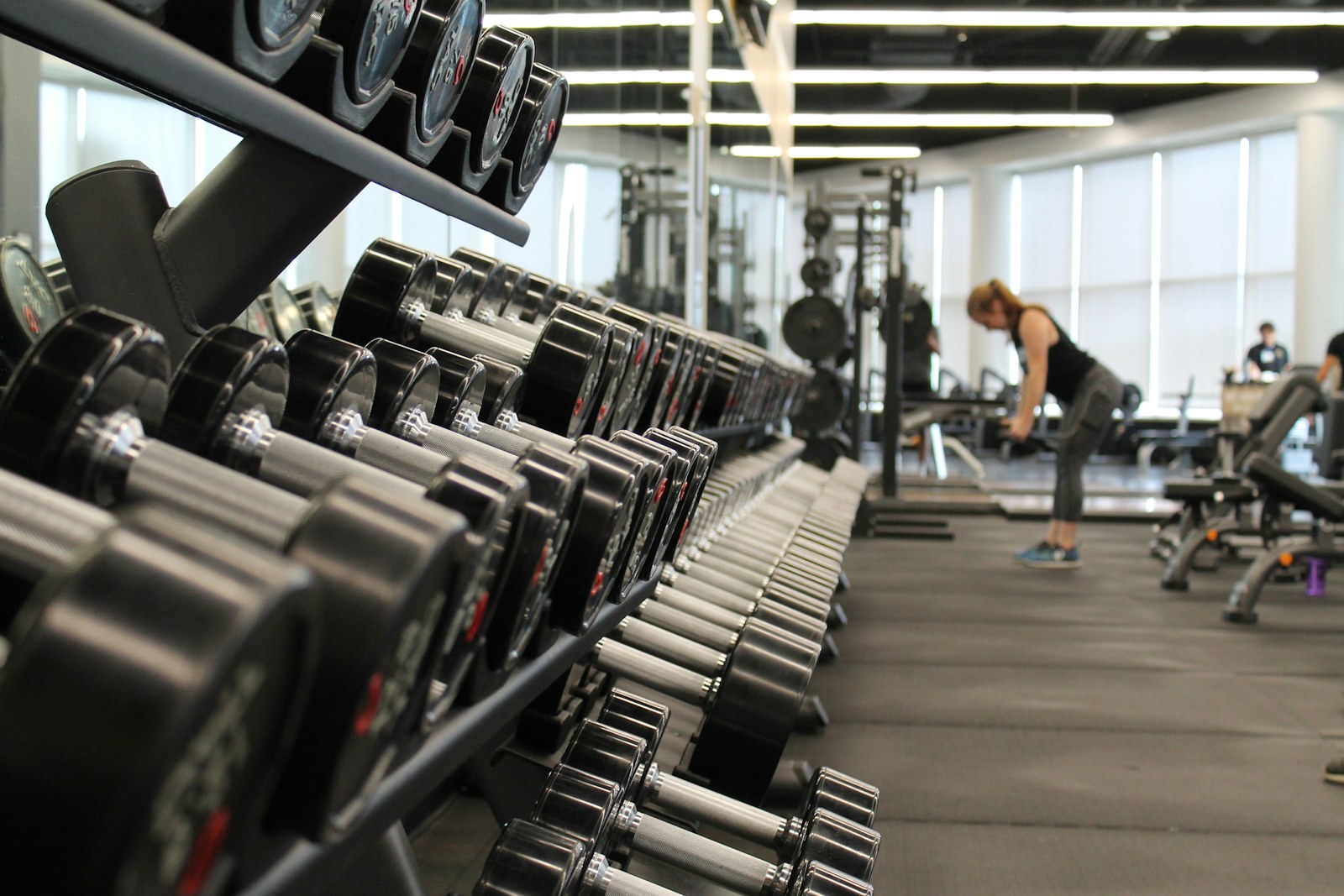
Choose a load you can control
Select dumbbells that allow eight to twelve clean repetitions while leaving roughly two repetitions in reserve. One lighter and one heavier pair are helpful, but a single adjustable pair works well. Technique and repeatable weekly training matter more than moving quickly with a weight you cannot control.
Block one: squat, row, and press
Perform goblet squats, one-arm rows, and floor presses for eight to twelve repetitions each. Complete three rounds, resting 45 to 90 seconds between exercises as needed. Move deliberately and keep the same range of motion from the first round to the last.
Block two: hinge, split squat, and carry
Perform dumbbell Romanian deadlifts, reverse lunges or supported split squats, and a suitcase carry on each side. Complete two or three rounds. The carry should challenge your grip and trunk without forcing you to lean away from the weight.
Add a short finisher only when useful
If technique remains solid, finish with five minutes of alternating step-ups and marching in place. A finisher is optional; it does not rescue an inconsistent programme. Beginners often progress faster by using the time to practise the main lifts and recover well for the next session.
Progress the session
First add repetitions within the target range, then add a small amount of load. If your dumbbells have large jumps, slow the lowering phase or add one round. Avoid increasing weight, rounds, and training frequency in the same week.
Bottom line
Use this guidance as a framework, then adapt it to your experience, equipment, budget, and health needs. Sustainable choices are the ones you can repeat.