
Start with the workout you will repeat
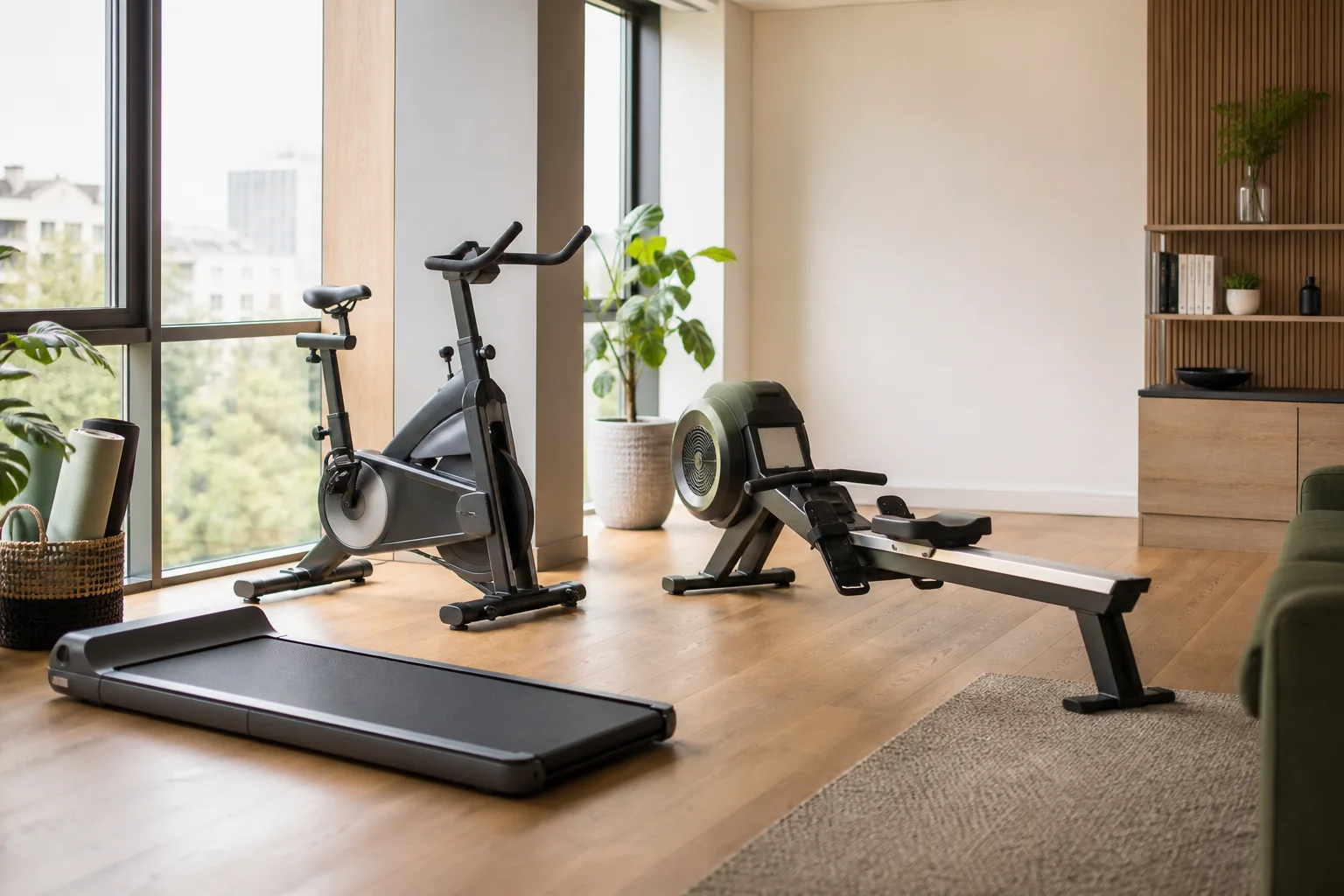
A compact machine is only valuable when it fits both your goals and your routine. Walking pads make daily movement easy to accumulate, exercise bikes offer joint-friendly cardio, and rowing machines combine aerobic work with repeated leg and upper-body effort. Choose the activity you can perform several times a week before comparing displays, apps, or premium finishes.
Measure the working footprint, not only storage size
Check the full length and width needed during exercise, then add clearance for mounting, moving handles, and safe access. A rower may stand upright between sessions yet require far more working length than a bike. Measure doors, corners, ceiling height, and the route from delivery point to workout space before ordering.
Treat noise as a system
Motor design, resistance type, belt speed, floor construction, and user movement all affect what neighbours or family members hear. Magnetic bikes and rowers are often quieter than air-resistance machines, while a dense equipment mat can reduce vibration transfer. Manufacturer noise figures are useful, but room acoustics and flooring still matter.
Compare the specifications that affect daily use
Prioritize user weight rating, adjustment range, stride or deck dimensions, resistance range, stability, stored dimensions, warranty, and access to replacement parts. Smart screens and app connectivity can improve motivation, but they should not compensate for poor fit or an unstable frame.
Build the smallest complete setup
For many homes, one cardio machine, adjustable dumbbells or bands, and a mat cover endurance, strength, and mobility without filling a room. Leave room to train around the machine. A clear floor area often adds more versatility than a second large piece of equipment.
Bottom line
Use this guidance as a framework, then adapt it to your experience, equipment, budget, and health needs. Sustainable choices are the ones you can repeat.