
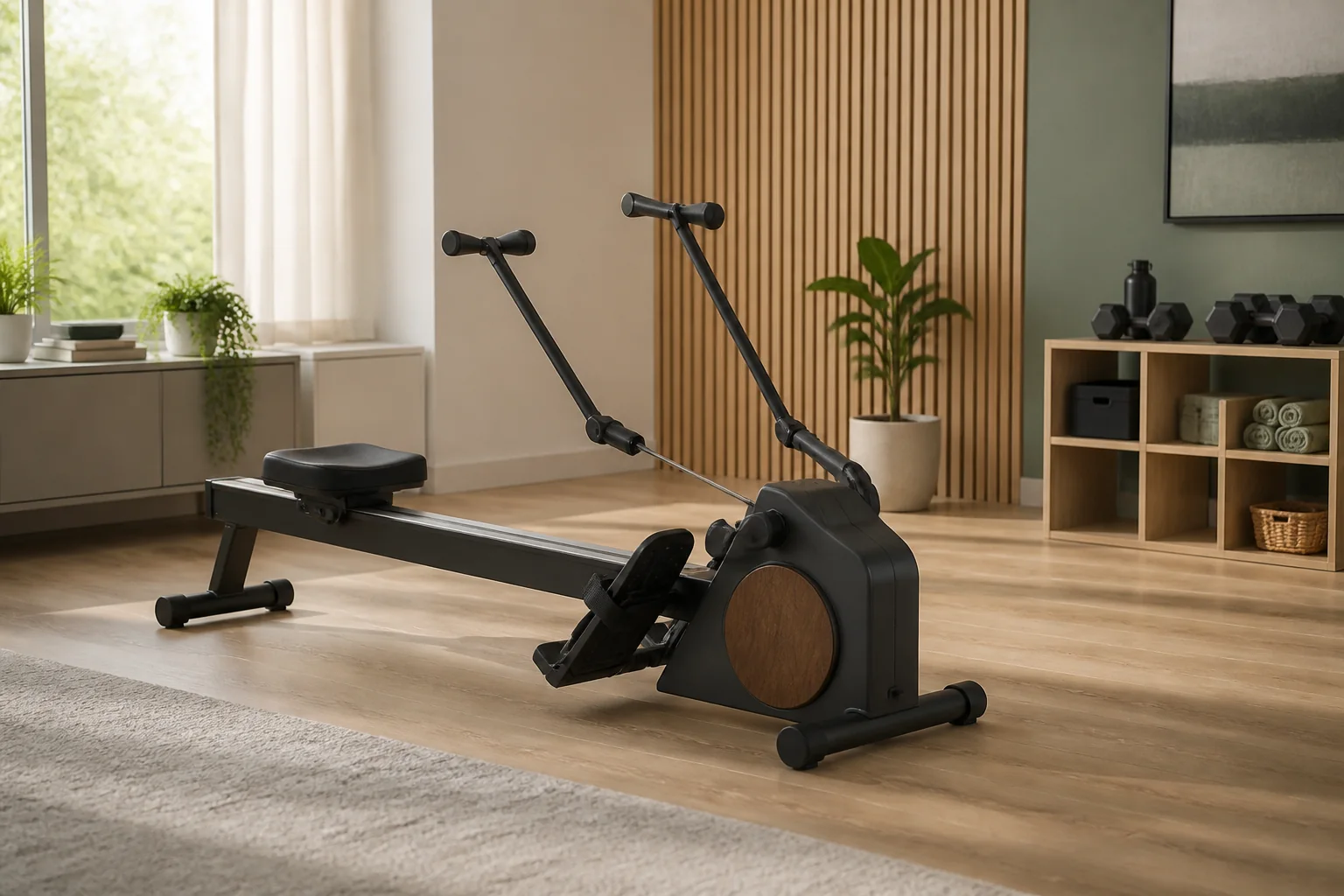
What makes the RS3 different
Most indoor rowers use one handle connected to a central chain, strap, or cable. The RS3 uses separate left and right handles and is promoted for bilateral or unilateral training. That design creates more movement options, but it also asks the user to coordinate the handles and maintain a consistent leg drive and trunk position.
Amazon-listed training features
The MERACH Amazon store lists 16 levels of quiet magnetic resistance, multiple rowing modes, multi-app support, an ergonomic seat, and a 350 lb maximum user rating. Its independent sculling-style handles are designed to simulate a wider rowing motion. Confirm current dimensions, storage instructions, included accessories, and the selected variation on Amazon.
Muscle imbalance claims need context
Independent handles can make left-to-right differences easier to notice and can provide unilateral practice. They do not diagnose or automatically correct pain, injury, or a clinically meaningful imbalance. If one side remains painful, weak, or difficult to coordinate, seek assessment from a qualified clinician or coach instead of simply adding resistance.
Technique comes before resistance
Begin with a stable foot position, a controlled leg drive, and a neutral trunk. Keep both handles moving through a comfortable path and avoid turning each stroke into an aggressive arm pull. Use low resistance while learning the pattern, record short side-view and front-view clips, and stop a set when timing becomes uneven.
Who should compare it
The RS3 may appeal to home users who want a quiet rower with more upper-body movement variety than a standard single-handle design. Buyers who train for indoor rowing performance should compare its stroke feel and data compatibility with conventional rowers, while small-space users should verify full working length and storage requirements.
Bottom line
Use this guidance as a framework, then adapt it to your experience, equipment, budget, and health needs. Sustainable choices are the ones you can repeat.