
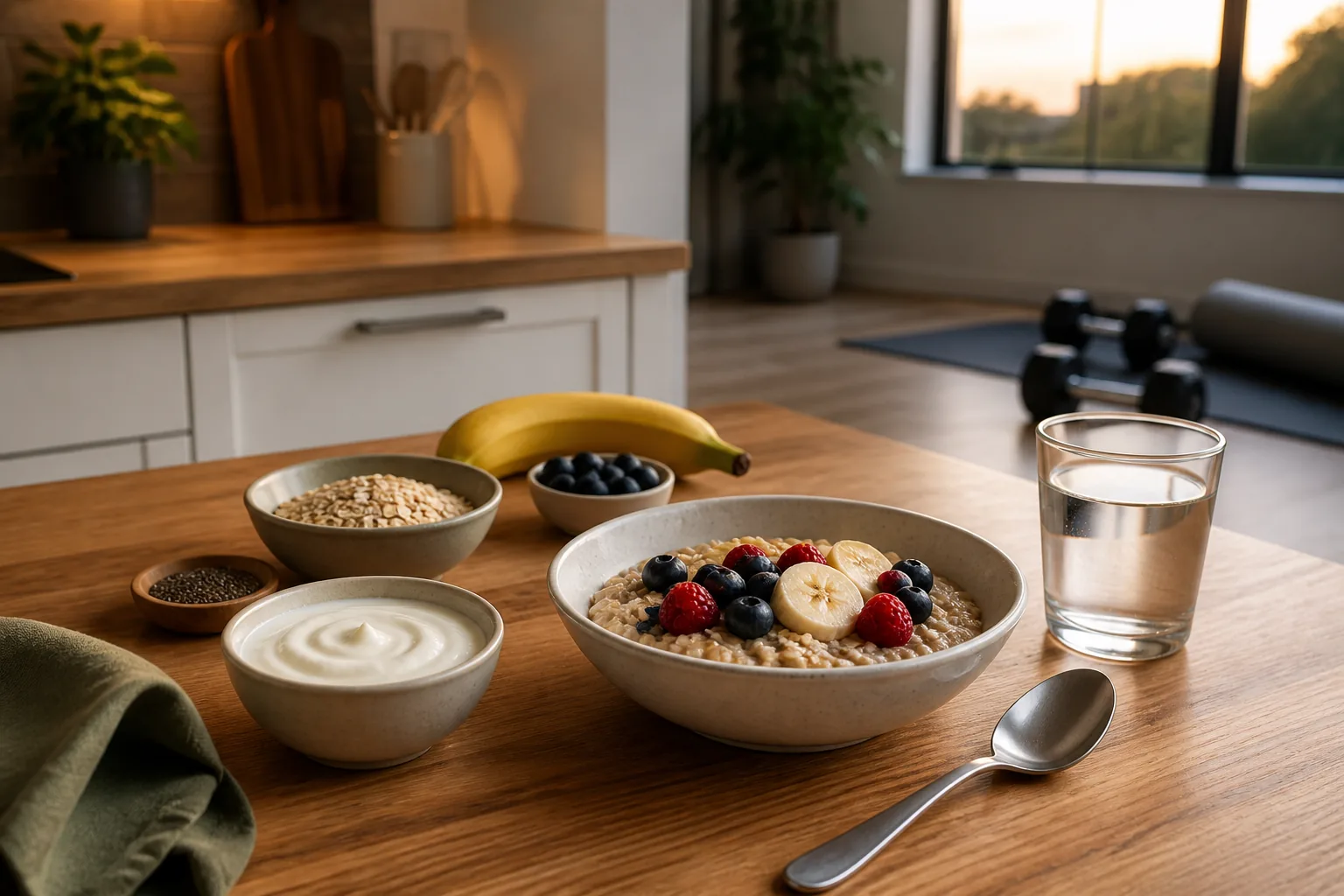
Let the time available set the meal size
If you have two to three hours before training, choose a normal meal that you already tolerate. With only 30 to 60 minutes available, a smaller snack is usually easier to digest. The goal is to begin the session comfortably fueled, not overly full. People vary, so use timing as a starting point and adjust from repeated experience.
Build the meal around familiar carbohydrates
Carbohydrate-rich foods can provide useful fuel for a demanding strength or cardio session. Oats, rice, potatoes, bread, fruit, or yogurt paired with fruit are practical options. A longer or harder workout may justify a larger serving, while a short mobility session may require no special pre-workout meal if you have eaten normally during the day.
Add a moderate protein source
A modest serving of yogurt, milk, eggs, tofu, fish, poultry, beans, or another familiar protein food can make the meal more complete. More is not automatically better immediately before exercise. Keep the portion comfortable and consider your total eating pattern across the day instead of treating one snack as the deciding factor in recovery.
Reduce digestive friction
Large portions and meals unusually high in fat or fibre can feel heavy when eaten close to movement, particularly during cycling, rowing, running, or circuits. This does not make fat or fibre unhealthy; it means timing and tolerance matter. Save experimental recipes and unfamiliar supplements for days when a disrupted workout will not matter.
Use a simple evening template
Two hours before training, try rice with vegetables and a familiar protein, or oatmeal with fruit and yogurt. Closer to the session, choose something smaller such as a banana with yogurt or toast with a light topping. Drink water with the meal, then eat a normal balanced dinner after training if hunger and bedtime allow. People managing diabetes, gastrointestinal conditions, food allergies, or other medical needs should seek individual guidance from a qualified clinician or registered dietitian.
Bottom line
Use this guidance as a framework, then adapt it to your experience, equipment, budget, and health needs. Sustainable choices are the ones you can repeat.